
- Best all-around adult pick: OMID V1 in Polarized Sapphire, VLT 12.39%, magnetic lens and an over-the-glasses (OTG) frame.
- Best for brightest days: V1 Polarized Silver, the darkest listed lens at VLT 11.77%.
- Best for changing light: V1 Polarized Pink, the most light-letting V1 lens at VLT 18.89%.
- Best for kids who wear glasses: OMID Z1 kids OTG goggles in Green Gold or Pink.
- Every pick is listed as fitting over glasses, with a dual-layer anti-fog lens and 100% UV protection.
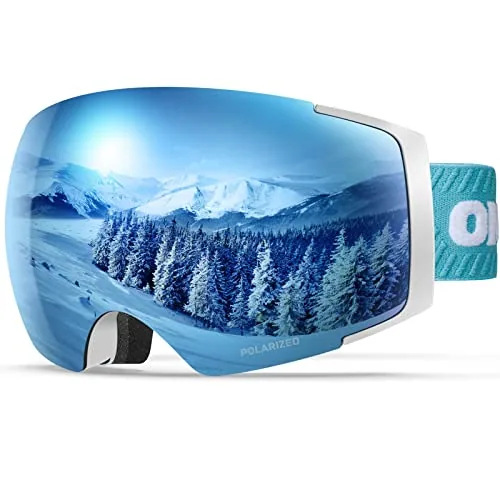 Best overall ski goggles for glassesOMID Ski Goggles
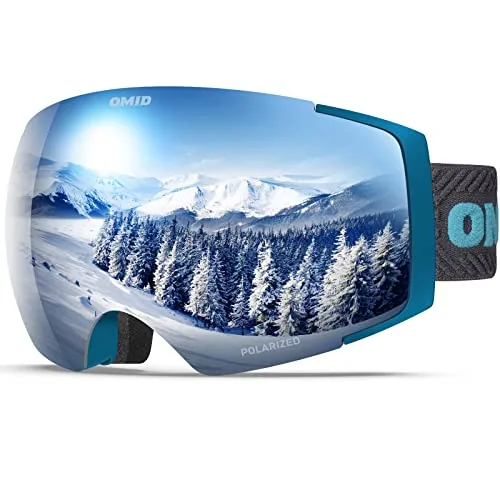 Best for bright bluebird daysOMID Ski Goggles
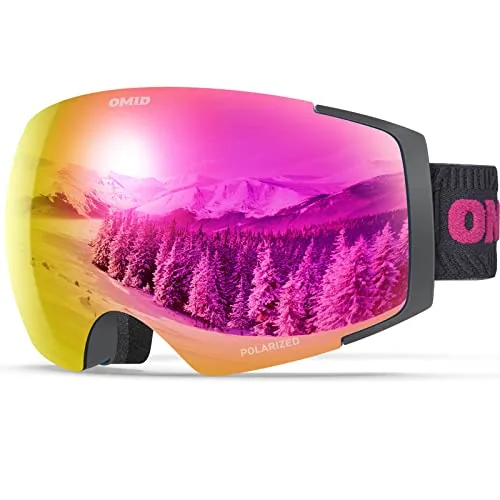 Best for mixed and changing lightOMID Ski Goggles
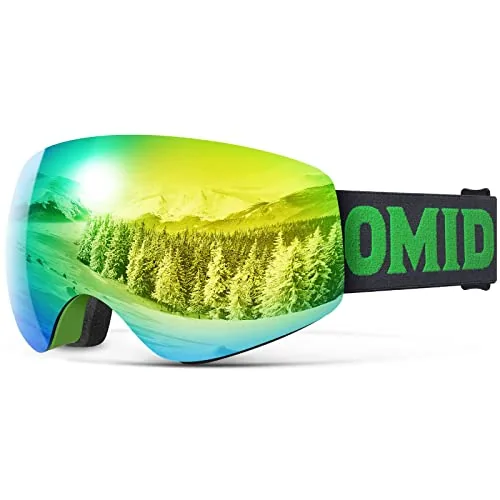 Best kids ski goggles for glassesOMID Kids Ski Goggles
Ski goggles for glasses, often called OTG (over-the-glasses) goggles, have a deeper frame and side cut-outs so your prescription frames fit inside without pressing on your nose or temples. The right pair lets you see the trail clearly without switching to contacts.
OMID makes two OTG goggles: the adult V1 with magnetic, polarized lenses and the Z1 for kids. This guide compares five lens and color options using the numbers in each listing, mainly the visible light transmission (VLT) of each V1 lens. Browse the full ski and snow range for socks and gloves to match.
Our picks
OMID Ski Goggles
The V1 is OMID's flagship OTG goggle, and the Polarized Sapphire lens sits in the middle of the V1 range at VLT 12.39%. The listing describes 8 earth magnets holding the lens and a swap in under 5 seconds, a dual-layer anti-fog lens with vents, and 100% UVA/UVB protection. It is frameless with a spherical lens and listed as compatible with most popular helmets.
- Fits over glasses, per the listing
- Magnetic lens change in under 5 seconds
- Polarized lens for glare off snow
- VLT 12.39% is a dark lens for stormy days
- Bullets do not say whether a spare lens is included
OMID Ski Goggles
Polarized Silver is the darkest V1 lens listed, at VLT 11.77%, so it lets the least light through. That suits high-altitude sun and bright spring snow. The frame, OTG fit, 8-magnet lens system and anti-fog design are the same as every V1.
- Lowest VLT of the three V1 lenses
- Polarized, with 100% UV protection listed
- Helmet compatible, per the maker
- Too dark for flat light or late-day shade
OMID Ski Goggles
Polarized Pink has the highest VLT of the listed V1 lenses, 18.89%, so it lets in more light than Sapphire or Silver. Pink and rose tints are a common choice for contrast when clouds move in. It keeps the V1's OTG frame, magnetic lens and dual-layer anti-fog design.
- Highest VLT of the V1 lenses listed
- Same OTG frame and magnetic swap
- Polarized lens
- Still a fairly dark lens for heavy snowfall or night skiing
OMID Kids Ski Goggles
The Z1 is OMID's kids goggle, and the listing says it fits over glasses for boys and girls. It uses a dual-layer anti-fog lens with an anti-fog coating, active vents, 100% UV protection and triple-layer face foam with moisture-wicking fleece. Like the V1 it is frameless with a spherical lens and listed as helmet compatible.
- OTG fit sized for kids
- Triple-layer face foam with fleece
- Dual-layer anti-fog lens and vents
- No VLT figure in the listing
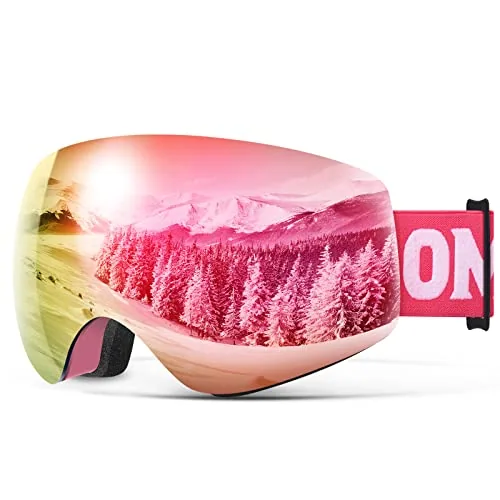
OMID Kids Ski Goggles
This is the same Z1 kids goggle in the Pink colorway. Everything else matches the Green Gold version: OTG fit, dual-layer anti-fog lens, 100% UV protection, vents and triple-layer face foam. Pick it if your child cares about color.
- Same OTG Z1 design
- Moisture-wicking fleece on the foam
- Helmet compatible, per the maker
- No VLT figure in the listing
How we picked the best ski goggles for glasses
We kept every OMID goggle whose listing says it fits over glasses, which covers the adult V1 and the kids Z1. Because the V1 is one frame sold with different lenses, we treated each listed lens as a separate pick and compared:
- OTG fit: whether the listing states the goggle fits over glasses.
- VLT: the visible light transmission percentage in the lens name.
- Lens tech: polarized lens, dual-layer anti-fog lens and vents.
- Lens change: magnetic swap on the V1, from the listing.
- Comfort: face foam and helmet compatibility.
We left out the V1 variant whose color name gives no VLT figure, since lens darkness is the point of this list. No prices or ratings are used.
OMID OTG ski goggles compared
| Goggle | Lens | VLT | Polarized | Fits over glasses | Magnetic lens |
|---|---|---|---|---|---|
| V1 | Polarized Sapphire | 12.39% | ✓ | ✓ | ✓ 8 magnets |
| V1 | Polarized Silver | 11.77% | ✓ | ✓ | ✓ 8 magnets |
| V1 | Polarized Pink | 18.89% | ✓ | ✓ | ✓ 8 magnets |
| Z1 kids | Green Gold | ~ Not listed | ~ Not stated | ✓ | ✗ Not stated |
| Z1 kids | Pink | ~ Not listed | ~ Not stated | ✓ | ✗ Not stated |
Visible light transmission by V1 lens
VLT % from each lens name in the listing; lower means darker
All three V1 lenses fall between about 12% and 19% VLT, a darker range that suits sunny skiing. If you ride a lot in storms, the magnetic system makes a lighter lens quick to fit, but check the listing to see which lenses come in the box.
OMID Ski Goggles
Check price →OMID Ski Goggles
Check price →OMID Ski Goggles
Check price →OMID Kids Ski Goggles
Check price →What makes good ski goggles for glasses?
OTG goggles solve two problems at once: making room for frames and keeping two layers of lenses from fogging. Look for these features:
- A stated OTG fit. Both OMID goggles say they fit over glasses. Standard goggles often press frames into your nose.
- Low-profile frames. Slim, rounded glasses fit inside OTG goggles more easily than wide, square ones. Try both together before your first run.
- Anti-fog design. Glasses trap warm air. The V1 and Z1 listings describe a dual-layer lens, an anti-fog coating and vents to move that air out.
- The right VLT. Low VLT (around 10 to 20%) is for sun; flat light calls for a higher number.
- Helmet fit. A frameless goggle with a wide strap sits flush under most helmets. OMID lists both models as helmet compatible.
Do ski goggles for glasses work with helmets?
Yes, if the goggle and helmet are designed to meet. OMID says both the V1 and Z1 are frameless with a spherical lens and compatible with most popular helmets. Check that the strap fits through or around the clip at the back of your helmet, and that there is no gap between the helmet brim and the top of the goggle, which lets cold air in.
With glasses inside, a slightly looser strap helps. Too much tension pushes the goggle, and your frames, into your face.
Finish the kit with warm layers from the same range: OMID's ski and snow page lists merino-blend ski socks and 3M Thinsulate gloves.
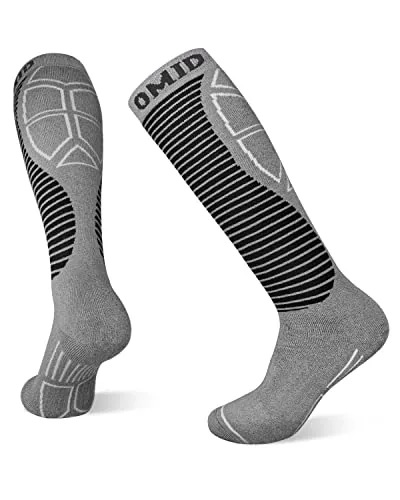
OMID Ski Socks
Check price →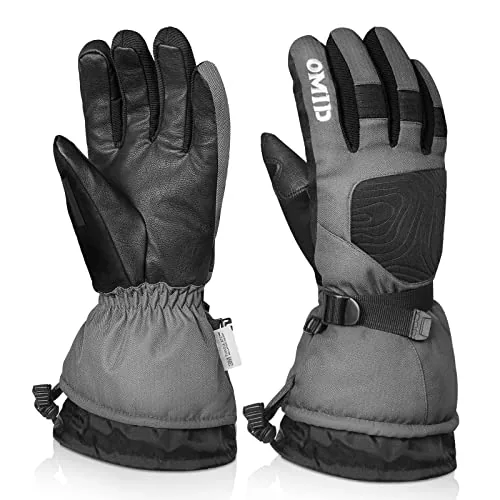
OMID Ski Gloves Men
Check price →V1 or Z1: which OTG goggle should you buy?
Choose the V1 for adults and teens who want polarized, magnetic lenses and a choice of VLT. Choose the Z1 for younger kids: it is built for boys and girls, adds triple-layer face foam with moisture-wicking fleece, and keeps the OTG fit. The V1 title also names youth, so an older teen may prefer it.
For a deeper look at the adult model, read our OMID V1 ski goggles review. Heading to the pool after the season? OMID's anti-fog swim lineup is covered in the best anti-fog swim goggles guide.
FAQ
What are the best ski goggles for glasses?
Look for goggles labeled OTG, or over-the-glasses. In the OMID range, the V1 with the Polarized Sapphire lens is a strong all-around adult pick, and the Z1 is the OTG choice for kids.
What does OTG mean on ski goggles?
OTG stands for over the glasses. The frame is deeper and shaped to leave room for prescription glasses, so you can wear both at once.
Will my glasses fog up under ski goggles?
They can. OMID's listings describe dual-layer lenses, anti-fog coating and vents to reduce fogging inside the goggle. Keeping your face covering below your nose and using an anti-fog cloth on your glasses helps too.
What VLT is best for ski goggles for glasses?
VLT works the same with or without glasses. Low VLT, like the V1's 11.77% to 18.89% lenses, suits sunny days. For snowfall and flat light, a lens with a higher VLT lets more light through.
Can kids wear OTG ski goggles?
Yes. The OMID Z1 is a kids goggle whose listing says it fits over glasses, with triple-layer face foam and helmet compatibility.
Are polarized ski goggles good with glasses?
Polarization cuts glare off snow and works fine over standard glasses. Every V1 lens on this list is polarized, per the listing.